
From its central logistics hub in Juba, ES-KO delivers food and supply chain services to the United Nations Mission in South Sudan (UNMISS), supporting approximately 9,400 peacekeepers across 51 locations. We spoke with Steven Sager about the operation, the people behind it and what it takes to deliver in one of the world's most demanding logistics environments.
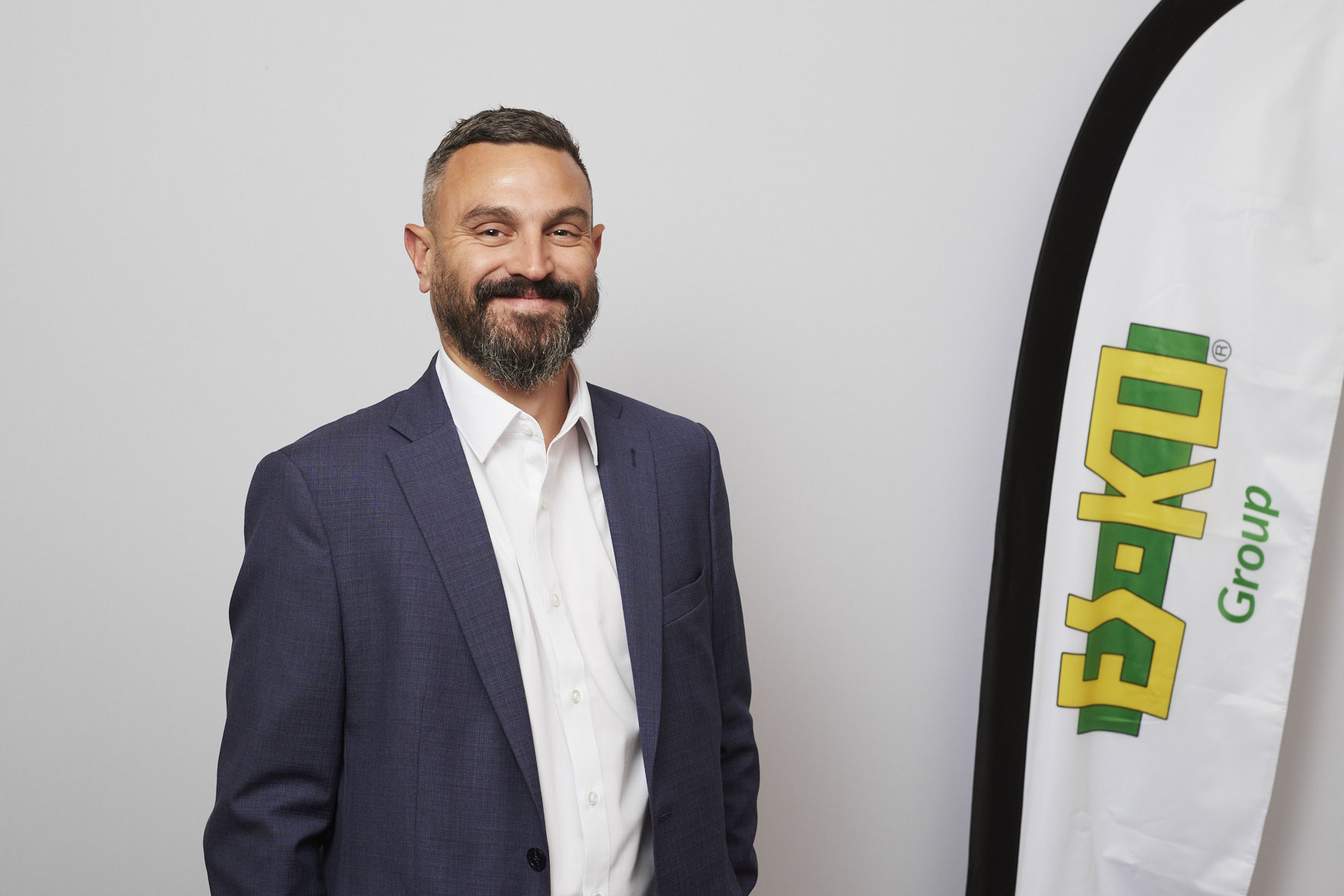 Steven, could you introduce yourself and tell us about your role?
I'm the General Manager for ES-KO's UNMISS operations in South Sudan. We operate a hub-and-satellite logistics model, with our central distribution hub in Juba supported by three satellite warehouses strategically located across the country. I also oversee our operations in Mombasa, Kenya, which serves as our regional logistics gateway. I joined ES-KO five years ago as the Project Inventory Manager. From there, I progressed to Deputy General Manager before being appointed General Manager.
How did your path lead you to South Sudan?
I'm originally from the UK and have worked in logistics for more than 23 years. My international career began in Afghanistan with Supreme Group, where I joined as apprentice and progressed to Operations Manager. The job took me to Guam, Liberia during the Ebola crisis, Mali and Côte d'Ivoire. After leaving the company, I spent a short period back in the UK before returning to Afghanistan with Pacific Architects and Engineers as a Supply Chain Management Analyst. I later established the new Movement Control Department, managing helicopter contracts and coordinating air movements across the theatre. As the mission ended in 2021, I interviewed with ES-KO and accepted the opportunity in South Sudan. Five years later, I'm still here, leading an exceptional team.
What services does ES-KO provide in South Sudan?
At its core, ES-KO provides end-to-end food supply chain services to UNMISS. We procure, store and distribute food and bottled water to peacekeepers deployed across South Sudan. Our range includes dry, chilled and frozen products, fresh fruit and vegetables, and bottled water. Reaching some locations is particularly challenging, so we use a combination of road, air and river transport to ensure supplies arrive safely, on time and in the right condition. The real challenge is maintaining product quality, food safety and a resilient supply chain in one of the world's most demanding operating environments.
ES-KO built and now runs the warehouse network. How does that work in practice?
The warehouses were built by ES-KO and are owned by the UN, but we are responsible for their day-to-day operation, maintenance and management on behalf of the mission. Each warehouse is staffed by a combination of international and national personnel, giving us the flexibility to deploy experienced teams. My management style is very hands-on, but it's equally important to maintain a strategic overview of the operation. I like to be visible in our warehouses, workshops and field locations, staying connected with the team.
Looking back over five years, what are the achievements you’re most proud of?
First, I don't really see these as my achievements—they belong to the team. I've been fortunate to work with an exceptional group of people, and everything we've achieved has been a collective effort. Winning the new UNMISS contract and successfully mobilizing the operation was a tremendous team effort and something I'm incredibly proud to have been part of.
If I had to pick a few other highlights, I'd start with the two barges we designed and built, EIS-1 and EIS-2. They have given ES-KO a completely new river logistics capability, allowing us to move large volumes of food and critical cargo efficiently. They've also enabled us to reach locations that could not be previously accessed by either road or fixed-wing aircraft. Another achievement was rebuilding a truck that had effectively been written off. The team brought it back into service in just six weeks at a fraction of the cost of replacing it.
We've also transformed the way we operate, moving from a seven-day operation with night shifts to a five-day working week. That wasn't achieved by asking people to work harder—it came from redesigning our warehouse layout and improving our processes.
This year also brought a personal milestone — congratulations on your Fellowship!
Thank you. In May I was awarded Chartered Fellow (FCILT) status by the Chartered Institute of Logistics and Transport (CILT UK). It’s the Institute’s highest grade of membership and one of the most prestigious distinctions in the profession, awarded only to professionals who’ve shown sustained leadership and a substantial contribution to the industry. It’s a real milestone, but I see it as a credit to ES-KO— everything I’ve achieved has been with this team.
How does ES-KO contribute to the local community and economy in South Sudan?
Developing local talent is a key part of our operation. One initiative I'm especially proud of is our technical workshop, where we train South Sudanese mechanics rather than relying on expat expertise. We're also proud to have female mechanics, helping create opportunities in a profession that has traditionally been male dominated. We also support the local economy by sourcing produce from South Sudanese suppliers wherever it meets the UN's strict food quality standards, although local agricultural production remains limited.
UN peacekeepers spend long stretches far from home. What does ES-KO do to make their lives better?
Our priority is ensuring every peacekeeper receives safe, high-quality meals on time, wherever they are deployed. We work hard to cater for different dietary, cultural and religious requirements, including halal, non-halal and vegetarian meals, while meeting the UN's nutritional standards. Many peacekeepers spend months away from their families, so providing reliable meals is one small contribution.
Security in South Sudan is a real factor. How do you manage it?
The honest way to describe South Sudan is unpredictable—you rarely know what the next day will bring. Some locations can be more challenging than others, and the safety of our people always comes first. We work closely with trusted local security partners and rely on good intelligence to minimize risk while continuing to support the mission.
Finally — what defines the way you and your team work?
We never say we can't. Rebuilding that damaged truck wasn't just about saving money—it was about proving what our team is capable of. We don't shy away from challenges; we find solutions and get the job done. Operating in high-risk environments has always been part of ES-KO's DNA, and it certainly shaped the way I lead. I'd like to thank every team member for their commitment, professionalism and hard work. Any recognition I receive is really a reflection of their efforts.
